The eruption of Mount Vesuvius in 79 CE remains one of history's most devastating natural disasters, burying the Roman cities of Pompeii and Herculaneum under meters of ash and pumice. For centuries, the remains of those who perished have offered haunting glimpses into ancient life—and death. Now, a combination of cutting-edge CT scans and 3D digital reconstruction has allowed archaeologists to identify one victim as a likely Roman doctor, shedding new light on the medical practices of the era.
The Eruption and Its Devastation
Mount Vesuvius erupted with a force equivalent to roughly 100,000 times the atomic bombs dropped on Hiroshima and Nagasaki. Pyroclastic flows—superheated clouds of gas, ash, and rock—raced down the volcano's slopes at speeds exceeding 100 kilometers per hour. Temperatures in these flows reached such extremes that they could boil brains and explode skulls, causing instantaneous death for many residents. While the majority of victims likely succumbed to asphyxiation from toxic gases, forensic evidence suggests that pyroclastic heat killed a significant number outright.
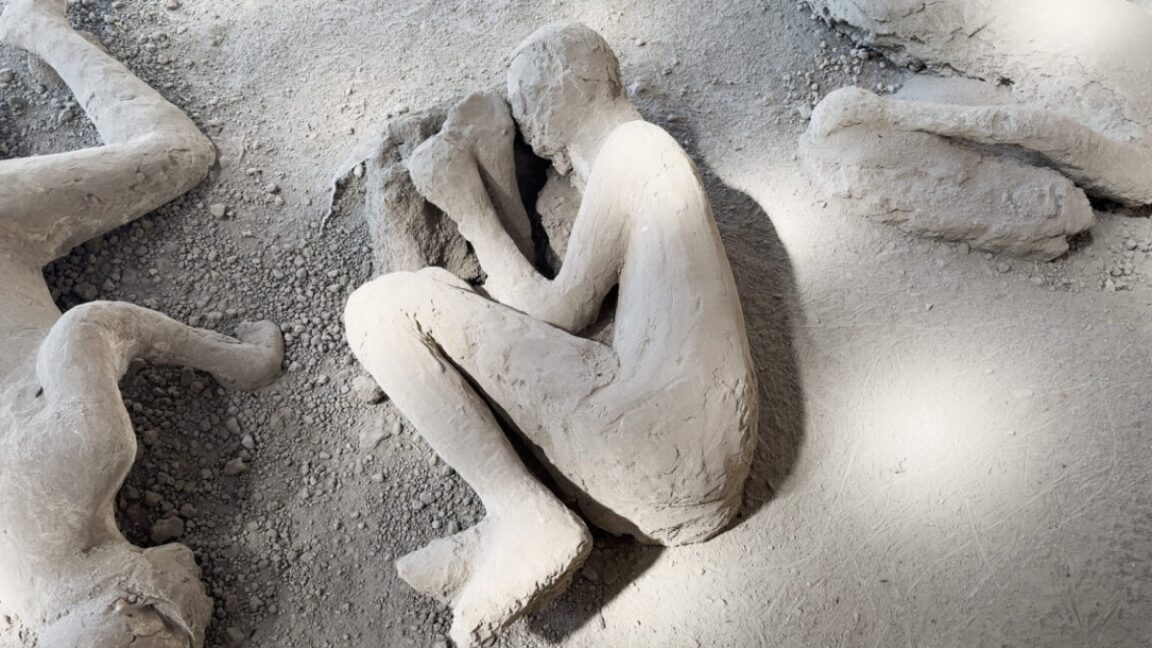
The Legacy of Giuseppe Fiorelli's Plaster Casts
In the 19th century, Italian archaeologist Giuseppe Fiorelli developed a revolutionary technique: he poured liquid plaster into voids left by decomposed bodies in the hardened ash. The plaster created detailed casts of the victims' final poses, capturing everything from facial expressions to clothing folds. Today, over 1,000 bodies have been unearthed, and 104 plaster casts have been preserved. About a decade ago, a major restoration project began on 86 of these casts, using CT scans and X-rays to assess the condition of any remaining skeletons inside.
Identifying the Doctor: CT Scans and 3D Reconstruction
Among the analyzed casts, one stood out. The individual was found with a collection of medical tools—a find that had long suggested a possible medical profession. However, the tools alone were not definitive proof. To confirm the hypothesis, researchers employed multidetector CT scanning to create high-resolution images of the bones and artifacts. These scans were then used to build a 3D digital model that allowed virtual unwrapping of the cast without damaging it.
Forensic Evidence of a Healer
The 3D reconstruction revealed distinctive wear patterns on the teeth and joints consistent with a person who frequently bit down on objects—possibly to hold tools while working. Additionally, the bones showed signs of repetitive stress injuries common among practitioners of manual medicine. The combination of tool context and skeletal markers led the Pompeii Archaeological Park team to announce that the victim was most likely a Roman doctor.
Significance of the Discovery
This identification goes beyond satisfying historical curiosity. It provides rare, direct evidence of medical practice in ancient Rome. Roman doctors, often Greek immigrants or slaves, relied on a mix of herbal remedies, surgical instruments, and holistic approaches documented by figures like Galen. The victim's tools—found in a leather bag—included scalpels, forceps, hooks, and a catheter, offering a concrete link to the medical kit described in ancient texts.
Methods and Evolution of Forensic Archaeology
The project demonstrates how modern technology can extract new information from century-old artifacts. CT scanning, originally developed for medical diagnostics, is now a standard tool in archaeological conservation. Combined with 3D printing, it allows researchers to create exact replicas of fragile casts for further study without risk. These non-invasive methods are especially crucial for Pompeii, where many remains are too delicate to handle.
What Else the Scans Reveal
Beyond the doctor, CT scans of other casts have uncovered previously hidden details: jewelry, coins, and even remnants of food inside stomachs. The analysis has also helped refine estimates of the victims' ages, sexes, and health conditions at the time of death. Such data enriches our understanding of daily life—and sudden death—in a Roman city caught in a catastrophic moment.
Future Research and Open Questions
While the identification of a Roman doctor is a breakthrough, many mysteries remain. Only a fraction of Pompeii has been excavated; countless more victims lie beneath unexcavated streets. The restoration project continues to scan and analyze the remaining casts, and each new discovery adds a piece to the puzzle of that fateful day. Archaeologists hope that ongoing work will reveal more about social roles, occupations, and even family relationships among the victims.
Conclusion
The use of advanced imaging to identify a Roman doctor among Pompeii's fallen is a testament to how science and archaeology can collaborate to illuminate the past. It transforms a silent cast into a story of an individual—a healer who lived and died in the shadow of Vesuvius, his profession frozen in ash for two millennia. As technology improves, the voices of other victims may yet be heard, one pixel at a time.