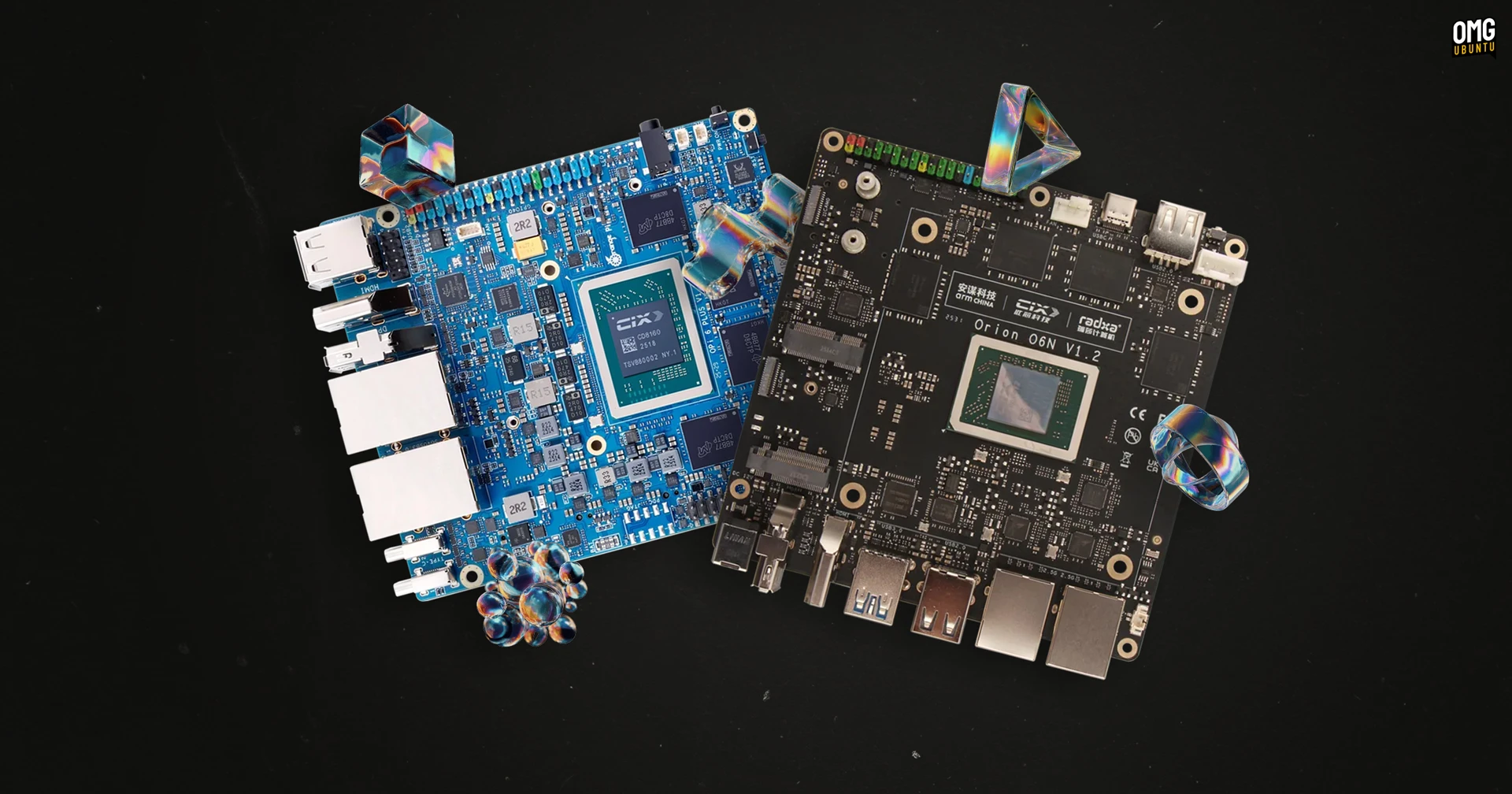
CANONICAL HAS UNVEILED a concept build of Ubuntu 26.04 designed specifically for the CIX P1 platform, bringing full Ubuntu support to Armv9-based single-board computers such as the Radxa Orion O6 and Orange Pi 6 Plus. This experimental release signals a major push into high-performance Arm ecosystems, targeting developers and edge computing enthusiasts seeking modern architecture benefits.
The concept image, shared by Canonical engineers, allows users to boot Ubuntu 26.04 on devices powered by the CIX P1 SoC—a chip leveraging the Armv9 instruction set. Armv9 brings enhanced security and performance features, including Memory Tagging Extension (MTE) and Scalable Vector Extension 2 (SVE2).
"This is a strategic move to ensure Ubuntu remains at the forefront of Arm innovation," said Dr. Sarah Lin, Ubuntu Product Manager at Canonical. "The CIX P1 platform represents a leap in single-board computer capability, and our concept build demonstrates our commitment to enabling bleeding-edge hardware for the open-source community."
Initial testing shows the OS boots successfully on the Radxa Orion O6, a high-end Armv9 SBC with up to 8 cores and 16GB RAM, as well as the Orange Pi 6 Plus, a more affordable alternative aimed at hobbyists. Canonical warns that this is a prototype and not recommended for production use.
Background: The Rise of Armv9 in Single-Board Computing
Arm introduced the Armv9 architecture in 2021, succeeding the ubiquitous Armv8. Armv9 adds advanced security features and improved machine learning performance. Until now, most Linux distributions for Arm SBCs have targeted Armv8 devices like the Raspberry Pi 4.

CIX Technology, the company behind the CIX P1 SoC, launched its platform in early 2025 with a focus on edge AI and embedded systems. The P1 integrates a quad-core Cortex-A78AE cluster and a quad-core Cortex-A55 cluster, delivering up to 40% better performance per watt than previous Arm SoCs.
"Getting Ubuntu 26.04 running on the CIX P1 is a milestone for the Arm Linux ecosystem," commented Mark Chen, a senior analyst at EdgeTech Research. "It shows that Canonical is serious about supporting next-gen architectures beyond the traditional x86 stronghold."
What This Means for Developers and the Edge Computing Landscape
For developers, this concept build provides a preview of how Ubuntu will behave on Armv9 hardware. It allows early testing of applications that require newer CPU instructions, such as secure enclaves or AI inference workloads.
For the edge computing industry, it accelerates the adoption of Arm-based servers and gateways. Companies building IoT or robotics solutions can now plan for a unified OS stack that scales from Raspberry Pi class devices to high-performance Orin-class SBCs.
"This is not just another Linux port; it's a signal that Armv9 is ready for mainstream Linux deployment," said Linda Torres, CTO of OpenHardware Inc. "The CIX P1, combined with Ubuntu, gives us a viable alternative to x86 for data-intensive edge operations."
Canonical encourages users to test the concept image and provide feedback on its forums. The company has not yet announced a timeline for official support, but this build lays the groundwork for future stable releases. As the Arm ecosystem heats up, competition among distributions will likely intensify, benefiting developers with more choices.
Next Steps for Enthusiasts
To try the build, users need a CIX P1-based SBC, a microSD card (16GB or larger), and basic familiarity with flashing Linux images. Instructions are available on Canonical's community wiki. The image includes a minimal desktop environment and common development tools.
Both the Radxa Orion O6 and Orange Pi 6 Plus are available for purchase through authorized retailers. The Radxa Orion O6 starts at $249, while the Orange Pi 6 Plus begins at $89, making the platform accessible for a wide audience.
This development comes weeks after Debian announced experimental Armv9 images, indicating a broader industry shift. Ubuntu's early move could solidify its position as the default OS for Arm Linux development.